The Nordic event industry is entering a new phase of transformation. For years, technology in events focused primarily on one thing: registration. Ticketing platforms made it easier for people to sign up, pay, and check in. That alone was a huge step forward from spreadsheets, manual guest lists, and printed tickets.
But today, registration and payments are just the starting point.
Across the Nordic region—whether in Norway, Sweden, Denmark, or Finland—events are becoming far more dynamic, data-driven, and experience-focused. Organizers are no longer just planning conferences or gatherings. They are building ecosystems where attendees, sponsors, partners, and communities interact long before the event begins and long after it ends.
This shift is changing what event technology needs to deliver.
The Nordics have always been early adopters of digital innovation. From mobile payments to smart cities, the region consistently embraces technology that simplifies complex systems. It is no surprise that the events industry is following the same path. Attendees expect seamless mobile experiences, organizers want real-time insights, and sponsors demand measurable outcomes from their investments.
The traditional “event tech stack” is no longer enough.
In the past, organizers often relied on separate tools for ticketing, event apps, engagement tools, lead capture, and analytics. These systems rarely spoke to each other. Data was fragmented, attendee experiences were inconsistent, and event teams spent valuable time managing multiple platforms instead of focusing on the event itself.
Today, the industry is moving toward something different: a connected event infrastructure.
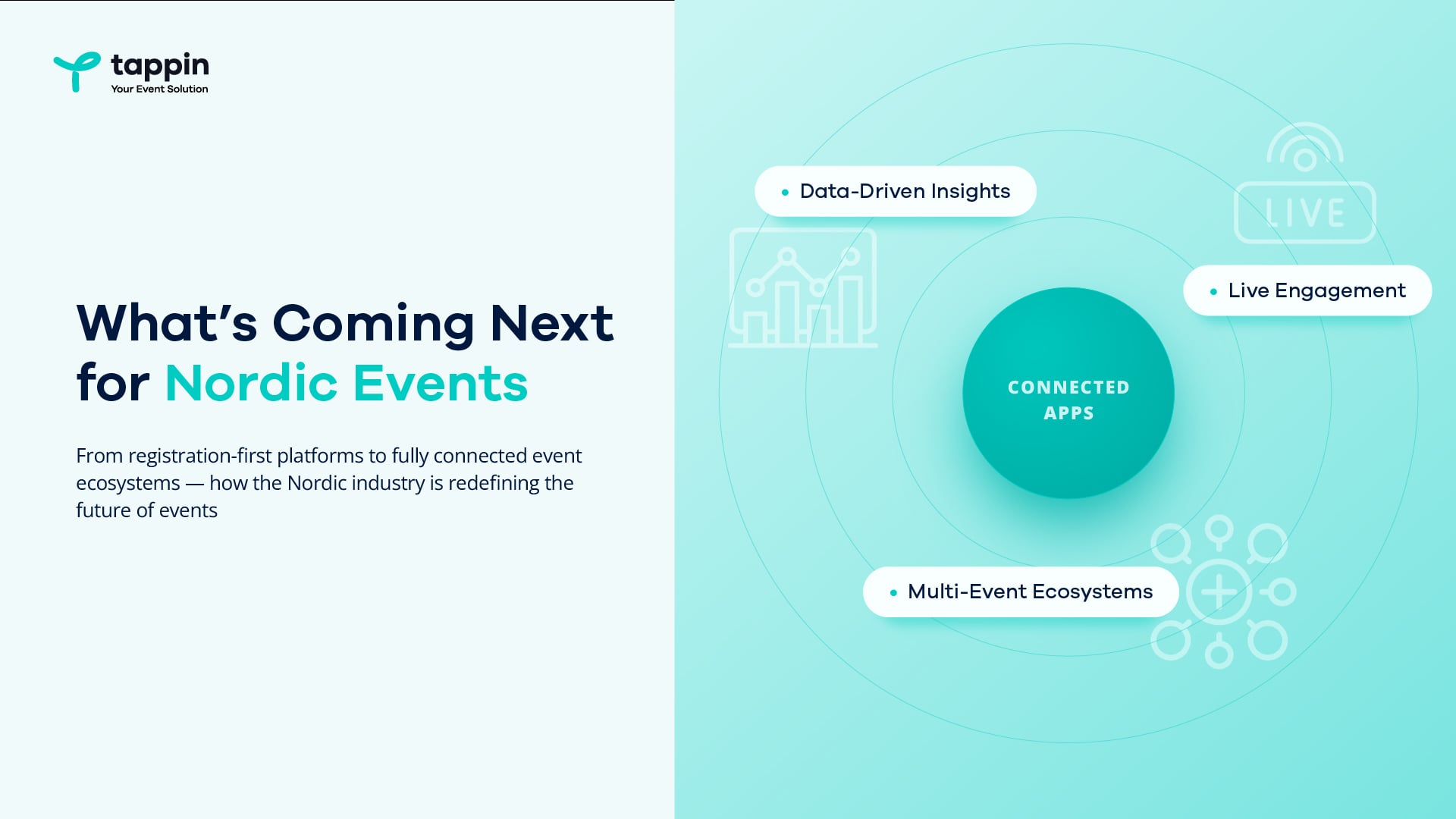
Instead of isolated tools, organizers are looking for platforms that support the entire event lifecycle—from registration and payments to engagement, networking, lead generation, and analytics. The goal is to create one connected ecosystem that powers both physical and digital experiences through modern hybrid events.
This is where the next evolution of event technology begins.
One of the most important developments we’re seeing in the Nordic event landscape is the move toward multi-event ecosystems. Large organizers and associations are no longer running just one conference per year. They host multiple events, community meetups, digital sessions, and industry gatherings throughout the year.
Rather than treating each event as a separate project, organizers want platforms that allow them to manage entire event portfolios from one system. Multi-tenant marketplaces are emerging as a powerful solution here. These environments allow organizers to host multiple nordic events under one umbrella, while maintaining distinct identities for each. Communities can stay connected year-round, sponsors gain access to recurring audiences, and organizers gain the ability to scale more efficiently.
At the same time, data is becoming central to how events are planned and measured.
In the past, event success was measured in fairly simple terms: number of attendees, ticket sales, or overall revenue. But modern event platforms are now able to capture much deeper insights into the attendee journey. Organizers can see which sessions attract the most engagement, how participants interact with sponsors, which networking moments create the most connections, and how different audience segments behave.
These insights are incredibly valuable. They allow organizers to design better programs, demonstrate return on investment to sponsors, and continuously improve the experience from one event to the next. In the future, we will likely see AI-driven tools helping organizers predict attendance trends, recommend sessions to participants, and personalize event journeys in ways that were never possible before.
Another important shift is happening around branding and digital identity.
Events today are no longer just gatherings; they are brands in their own right. The best conferences build strong identities that extend across digital and physical spaces. From the registration flow to the mobile event app, every interaction should feel consistent with the event’s personality and visual identity.
For organizers, this means event technology must be flexible. Platforms need to allow full event-level branding so that each event can look and feel unique while still running on a powerful underlying system. As events grow larger and more international, this ability to create fully branded digital environments will only become more important.
Perhaps the most exciting transformation, however, lies in how nordic event technology is beginning to connect the entire attendee journey.
A modern event is rarely limited to a single venue. Attendees book hotels, travel between locations, check in to different sessions, network with sponsors, and participate in multiple activities throughout the event. The next generation of event platforms is starting to integrate these elements into one seamless experience.
Imagine registering for an event, booking accommodation, receiving a digital credential, checking in with a QR code, accessing your personalized agenda, interacting with speakers, and collecting rewards—all through one connected platform.
That level of integration removes friction for attendees and gives organizers a much clearer view of the entire nordic event journey.
At Tappin, this is exactly the direction we are building toward.
Registration and payments will always remain important, but they are only one piece of a much larger puzzle. The real opportunity lies in creating a connected event platform that supports everything from attendee engagement and sponsor visibility to data insights and long-term community building.
Our focus is on helping organizers run smarter events—events that are scalable, data-driven, and designed for meaningful interaction.
The Nordic event landscape is evolving quickly. Technology will continue to play a central role in shaping how events are organized, as highlighted in our latest event industry insights. But the goal is not to add more tools or complexity. The goal is to simplify the entire ecosystem. Because the future of events is not just digital. It is connected.