Hybrid tech events are no longer experimental formats they are now the backbone of conferences, developer summits, innovation expos, and corporate technology forums across Norway and the Nordic region. But as hybrid becomes standard, expectations rise. Simply streaming a stage to an online audience is not enough.
In 2026, hybrid event engagement is the defining metric of success. Organisers are measured not only by attendance numbers, but by interaction rates, networking quality, session retention, and measurable ROI. The key to achieving this? A strategic combination of AI-powered event platforms, automation workflows, and intelligent audience design.
This guide explores how to increase engagement at hybrid tech events and how Tappin.no is using AI-driven automation to redefine hybrid event experiences in Norway.
Why Engagement Is the New Event Currency
In the Nordic tech ecosystem, audiences are digitally mature and highly selective. Whether attending a developer conference in Oslo or joining virtually from Stockholm or Helsinki, participants expect:
- Seamless digital access
- Personalised content recommendations
- Real-time interaction with speakers
- Smart networking opportunities
- On-demand access post-event
Hybrid event technology has evolved rapidly across the Nordic market. Organisations now recognise that engagement drives retention, sponsorship value, lead generation, and long-term community growth. Without engagement, hybrid events become passive broadcasts. With it, they become growth engines.
Design Hybrid Tech Events as One Unified Experience
One of the most common mistakes in hybrid event planning is treating the physical and digital audiences as two separate groups. This creates imbalance and disengagement, particularly for remote participants.
Successful hybrid tech events are designed as one experience with two access points.
This means:
- Livestreams are professionally produced, not secondary camera feeds.
- Online participants can ask live questions and see their input addressed in real time.
- Polls and surveys are synchronised across both audiences.
- Networking tools connect physical and virtual attendees seamlessly.
A unified hybrid event platform ensures parity. Engagement increases when remote attendees feel equally valued.
Using AI to Personalise Hybrid Tech Event Experiences
Personalisation is one of the most powerful engagement drivers in 2026.
AI-powered hybrid event platforms analyse attendee behaviour, interests, and past participation to create personalised agendas and session recommendations. Instead of overwhelming participants with a packed program, the system suggests the most relevant content in real time.
For example:
- A CTO attending a cybersecurity track receives reminders and networking suggestions aligned with that interest.
- A startup founder exploring AI sessions is recommended relevant exhibitors and discussion rooms.
This type of AI-driven attendee journey mapping significantly increases session attendance, platform time, and post-event satisfaction.
Automate Smart Communication Before, During, and After the Event
Engagement begins long before the conference opens.
Automation tools allow organisers to send:
- Personalised registration confirmations
- Smart reminders based on session preferences
- Automated calendar integrations
- Push notifications for live sessions
- Real-time updates during program changes
During the event, automation can trigger engagement nudges such as reminders when a bookmarked session starts or alerts when a relevant networking match is available.
After the event, automated follow-ups distribute session recordings, AI-generated summaries, feedback forms, and personalised content recommendations.
These automated touchpoints maintain momentum and extend engagement beyond the physical event timeline.
Leverage AI Matchmaking for High-Value Networking
Networking is often the primary reason professionals attend tech events. In hybrid environments, networking can feel fragmented unless supported by intelligent systems.
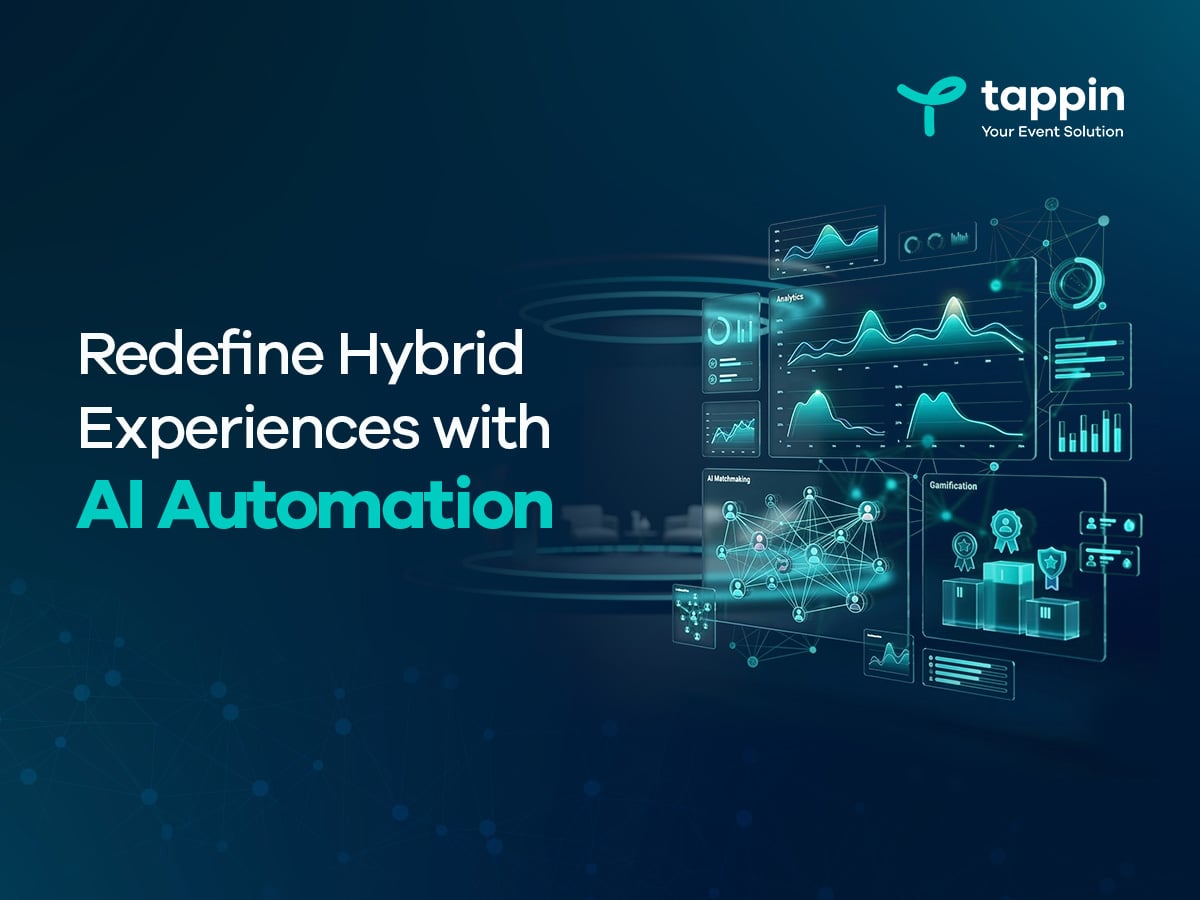
AI matchmaking uses shared interests, job roles, industries, and behavioural data to recommend meaningful connections. Instead of random chat rooms or passive contact exchanges, attendees receive curated networking suggestions.
This increases:
- Quality of interactions
- Meeting bookings
- Sponsor visibility
- Long-term community engagement
For sponsors and exhibitors, AI-powered lead qualification tools help identify high-intent prospects, improving conversion rates and demonstrating measurable ROI.
Leveraging Data for Smarter Hybrid Tech Events
Hybrid tech events generate powerful data streams: session attendance rates, engagement levels, chat activity, networking connections, and behavioural trends.
With AI-powered analytics dashboards, organisers can monitor engagement in real time and adjust dynamically promoting under-attended sessions, extending popular discussions, or activating push notifications to boost participation.
Post-event analytics provide deeper insights:
- Which sessions had the highest retention?
- Where did drop-offs occur?
- Which industries were most engaged?
- What networking matches led to follow-up meetings?
Data-driven event management is one of the biggest engagement multipliers in the Nordic hybrid event landscape.
Gamification and Interactive Content in Hybrid Tech Events
Hybrid audiences respond well to interactive elements such as:
- Live quizzes
- Leaderboards
- Digital badge systems
- Interactive workshops
- Audience voting
Gamification, when powered by automation, increases platform activity and keeps digital attendees actively involved rather than passively watching.
The goal is continuous participation, not passive consumption.
How Tappin.no Increases Hybrid Tech Event Engagement with AI Automation
At Tappin.no, hybrid tech events are engineered for engagement from the ground up.
Tappin’s AI-driven event platform integrates registration, communication, livestreaming, networking, and analytics into a single ecosystem eliminating fragmented tools that reduce user experience quality.
Through intelligent automation, Tappin enables:
- Personalised attendee journeys
- Automated communication workflows
- AI-powered matchmaking
- Real-time engagement analytics
- Seamless integration between physical and digital participation
Rather than running two parallel events, Tappin ensures one connected hybrid experience.
Real-Time Nordic Example: Tappin with Tekna and EHIN
Tappin’s impact is visible in major Norwegian tech and professional events.
With Technology, one of Norway’s largest professional associations for engineers and technology experts, hybrid events required seamless digital access alongside strong in-person participation. Tappin’s platform supported high-volume registrations, automated attendee communication, and interactive session management ensuring both physical and virtual participants experienced equal engagement.
At EHIN, Norway’s leading e-health and digital health conference, hybrid delivery demanded reliability, intelligent networking, and real-time analytics. Tappin’s AI-powered system facilitated live Q&A, digital matchmaking between health-tech stakeholders, automated updates, and comprehensive post-event reporting transforming the conference into a measurable engagement engine rather than a one-time gathering.
These real-world examples demonstrate how AI automation elevates hybrid tech events from functional to exceptional.
The Future of Hybrid Tech Event Engagement
As hybrid tech events continue to dominate the Nordic market in 2026 and beyond, engagement will remain the primary competitive advantage. Artificial intelligence, predictive analytics, automation workflows, and unified event platforms will define which conferences thrive.
Increasing engagement at hybrid tech events is not about adding more features. It is about intelligently connecting people, content, and technology. With AI-driven automation at its core, Tappin.no is shaping the future of hybrid tech event engagement in Norway helping organisations deliver smarter, more interactive, and measurable event experiences that truly connect audiences across physical and digital spaces.