Physical events – traditional in-person gatherings such as conferences, trade fairs, and live workshops remain a staple in Scandinavia’s corporate and tech sectors. After the pandemic years, demand for in-person events has rebounded strongly. According to global industry insights, 78% of organisers still consider physical events the most impactful channel for direct human interaction and experiential learning.
Strengths of physical events:
- Rich, face-to-face networking: Nordic audiences place high value on real-world connection, spontaneous conversations over coffee, and the immersive experience of venue-based events.
- Brand presence and experience: Live environments allow organisers to curate branded experiences, live demos, and exhibitor interactions that resonate emotionally with attendees.
- Training and deep engagement: For workshops, certification programs, and product launches, in-person settings strengthen participant focus and retention.
However, these benefits come with limitations. Physical events require travel, higher costs (venues, logistics, staff), and are constrained by local attendance. That means organisations targeting international audiences face both budget and reach challenges.
Digital Events: Broad Reach and Cost-Efficiency
Digital events – entirely virtual experiences delivered over online platforms are still widely used in Scandinavia for webinars, online summits, and remote corporate training. Industry research shows that virtual formats remain a core part of event strategies, with 93% of organisers planning to continue investing in virtual events.
Advantages of digital events include:
- Global accessibility: Attendees from anywhere including remote specialists or international partners can tune in without travel constraints.
- Cost effectiveness: Digital production eliminates venue and catering costs, enabling higher frequency of events with lower overhead.
- High engagement tools: Virtual platforms leverage chat, polls, and interactive Q&A to drive engagement especially valuable for scalable knowledge sharing.
Yet, digital events also have trade-offs. Purely online experiences may lack the emotional impact and networking depth of physical gatherings. In addition, some audiences report that sustained virtual attention can be harder to maintain without the structure of an in-person setting.
Hybrid Events: The Best of Both Worlds
In Scandinavia, the growing consensus among event professionals is that hybrid events provide the best balance between engagement, reach, and business value. Hybrid events combine physical and digital participation in one unified experience allowing attendees to choose how they participate while maintaining interactive parity.
Industry data supports this shift:
- Up to 73% of event planners say hybrid is their go-to format for future events.
- Hybrid events can increase attendance by up to 40% compared with physical-only formats.
- Many organisers report higher ROI and extended brand reach with hybrid approaches, thanks to broader audience inclusion and interactive digital features.
Why hybrid works especially well in Scandinavia:
- Highly connected populations: Nordic audiences have strong digital literacy and high expectations for integrated experiences.
- Cross-border communities: Scandinavian industries from tech and sustainability to design and healthcare often operate regionally or globally; hybrid formats expand reach without demanding travel.
- Sustainability priorities: Hybrid events reduce carbon footprint by cutting travel, aligning with strong Nordic commitments to ESG and green practices.
But hybrid events are more than a convenience: when done right, they empower organisers to shape one cohesive experience, not two separate events. Remote and onsite participants can ask questions, vote, join workshops, and access on-demand content with equal participation rights.
Choosing the Right Event Format: Realistic Considerations
Physical events excel when:
- The goal is deep networking, relationship building, or immersive experiences.
- There’s strong local demand and high participant affinity for live interaction.
Digital events excel when:
- The target audience is global or geographically dispersed.
- Lower operational cost and high frequency are priorities.
Hybrid events excel when:
- You need both reach and depth: local impact plus remote accessibility.
- Your audience spans industries, geographies, and preferences.
- Data-driven engagement, analytics, and community growth matter.
Hybrid formats align well with modern event goals, offering flexibility that adapts to changing attendee expectations while maximising business value. This is why hybrid is rapidly becoming the dominant strategy for event portfolios worldwide and especially in tech-forward markets like Scandinavia.
How AI and Automation Elevate Every Format
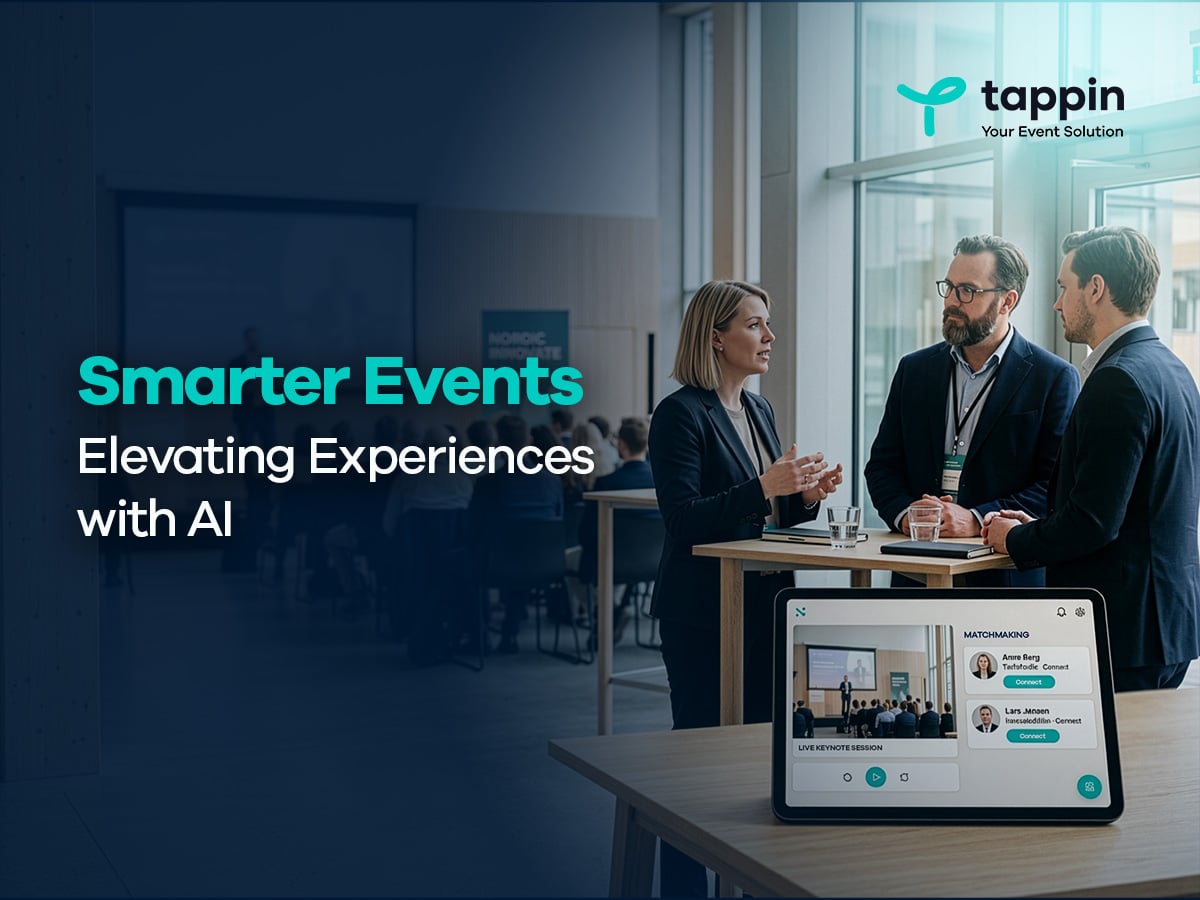
What differentiates standout hybrid experiences in 2026 isn’t just format choice it’s technology and automation. AI-powered platforms now deliver engagement features that once seemed futuristic: personalised agendas, real-time matchmaking, automated communication, and session analytics. These tools help organisers maximise ROI and deliver memorable experiences regardless of physical or digital participation.
Automation simplifies workflows like registration, email sequences, reminders, and post-event follow-ups turning what used to be manual, labour-intensive tasks into seamless processes.
These capabilities especially benefit hybrid events, where synchronising interaction across audiences can be complex without intelligent tools.
Tappin.no: Automating Hybrid and Physical Events with AI
At Tappin.no, hybrid and physical events are not separate undertakings they are part of one connected experience powered by AI and automation. Rather than treating remote attendees as an add-on, Tappin’s platform unifies every touchpoint:
- AI-driven engagement: personalised session recommendations, smart notifications, and matchmaking that increases participation and retention.
- Automated workflows: from registration to reminders, speaker management to feedback loops, enabling teams to focus on strategic content, not manual tasks.
- Seamless integration: both physical and digital elements live in one platform, eliminating fragmentation and enhancing experience continuity.
Whether companies aim to host an in-person executive summit, an entirely virtual product launch, or a hybrid industry conference with global reach, Tappin’s automation ensures that the event runs smoothly, engages audiences, and delivers measurable impact.
Final Thoughts
There is no one-size-fits-all event format but in Scandinavia’s vibrant, digitally connected landscape, hybrid events are emerging as the most effective solution for organisations seeking scale, engagement, and lasting business impact. By combining the energy of physical gatherings with the accessibility of digital participation, hybrid formats offer a comprehensive and measurable approach to modern event strategy. With AI-powered automation platforms like Tappin.no, organisations can execute both hybrid and physical events with exceptional efficiency, delivering experiences that resonate with diverse audiences throughout the Nordic region and beyond.