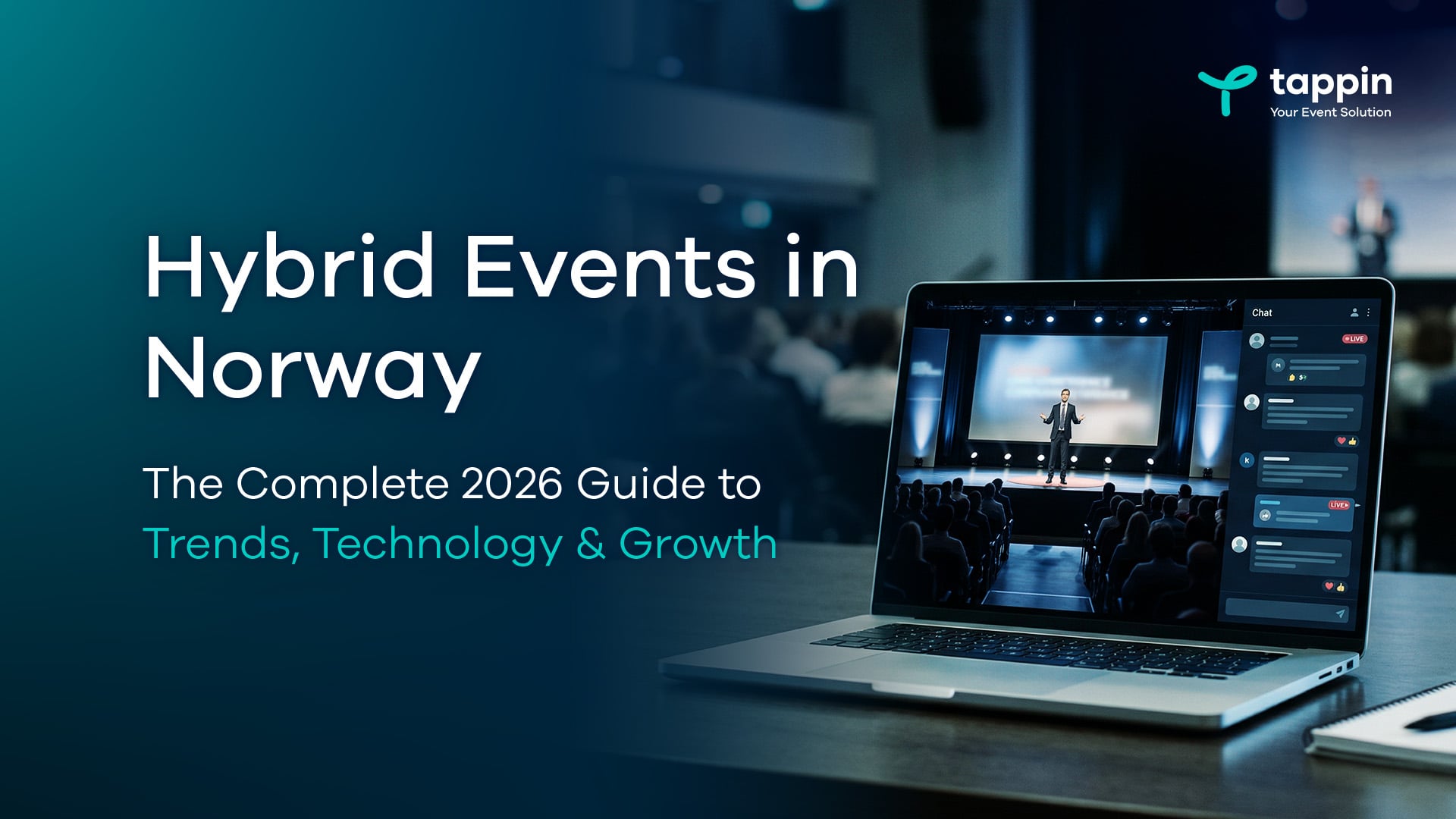
Hybrid events in Norway have moved far beyond a temporary solution they are now the standard model for conferences, corporate events, trade shows, and public sector gatherings in 2026. As businesses across the Nordic region embrace digital transformation, hybrid event solutions are becoming central to audience engagement, scalability, sustainability, and measurable ROI.
For companies planning events in Norway, understanding the latest hybrid event trends, Nordic market statistics, and AI automation technologies is essential. This comprehensive 2026 guide explores how hybrid events are evolving across Norway and the Nordics and how Tappin.no is leading the way with intelligent automation.
The Rise of Hybrid Events in Norway
A hybrid event combines physical and digital experiences into one seamless format, allowing participants to attend either in person or online. The model first gained momentum during the global pandemic, but it has since matured into a strategic growth channel for Nordic organisations.
Across Europe, the hybrid event market continues to expand rapidly. The global hybrid event software market is projected to reach nearly $7 billion in revenue in 2026, reflecting strong demand for scalable, tech-driven event infrastructure. In the Nordic region, where digital adoption rates are among the highest in the world, businesses are uniquely positioned to leverage hybrid event technology for competitive advantage.
Norway’s high broadband penetration, mobile-first population, and strong enterprise tech adoption make it one of the most advanced hybrid event markets in Europe. Major business conferences, innovation summits, and technology expos across Oslo, Stavanger, and Bergen increasingly integrate live streaming, on-demand sessions, AI-powered networking, and real-time audience engagement tools as standard features.
Hybrid is no longer a backup plan. It is now a growth strategy.
Hybrid Event Market Trends in the Nordic Region
In 2026, hybrid event planning in Norway revolves around three core drivers: audience expansion, data intelligence, and sustainability.
First, audience reach. Hybrid formats consistently deliver higher attendance compared to in-person-only events. Industry data shows that hybrid events can increase participation by up to 40%, as remote attendees remove geographical and travel barriers. For Nordic companies with international stakeholders, this global accessibility significantly improves brand visibility and lead generation.
Second, AI-powered engagement and automation have become central to event execution. Nearly half of global event professionals already use AI tools in their workflows, and adoption is accelerating across the Nordic market. Artificial intelligence is now embedded in event matchmaking systems, personalised session recommendations, automated content summaries, real-time translation, and predictive attendance analytics. These capabilities are transforming hybrid events from passive broadcasts into interactive, data-driven experiences.
Third, sustainability continues to shape hybrid event strategy in Norway. Reduced travel emissions, lower venue footprint, and digital-first content distribution align with Nordic environmental priorities. Hybrid events allow organisations to maintain meaningful in-person experiences while significantly reducing their carbon impact an increasingly important metric for ESG reporting and corporate reputation.
The Technology Behind Successful Hybrid Events
The most successful hybrid events in Norway in 2026 are powered by integrated event technology ecosystems rather than standalone livestream platforms. Modern hybrid event platforms combine registration systems, ticketing, live streaming, networking tools, AI chatbots, analytics dashboards, and CRM integrations into one cohesive environment.
Personalisation is now expected. Attendees receive customised agendas based on their interests, AI-generated networking suggestions, and automated reminders that increase session participation rates. Post-event, organisers gain access to detailed behavioural analytics showing engagement duration, content preferences, and conversion metrics.
This shift from event execution to event intelligence is redefining how Norwegian companies measure ROI. Hybrid events are no longer just experiential touchpoints; they are measurable business growth channels.
Challenges in Hybrid Event Planning
Despite its advantages, hybrid event management presents operational complexities. Balancing the experience between in-person and online audiences remains a key challenge. Remote participants expect equal engagement opportunities live Q&A, networking rooms, chat moderation, and interactive polls must feel seamless and inclusive.
Technical reliability is another critical factor. Bandwidth, streaming quality, cybersecurity, and real-time platform performance must be managed flawlessly. In Norway’s competitive event market, attendee expectations are high, and technology failures can impact brand perception.
This is where automation and AI-driven infrastructure become essential rather than optional.
How Tappin.no is Shaping the Future of Hybrid Events with AI Automation
At Tappin.no, hybrid events are not simply about connecting a camera to a conference room. They are about building intelligent event ecosystems powered by AI automation, smart workflows, and real-time data insights.
Tappin’s hybrid event solutions are designed specifically for the Nordic market, where digital sophistication and user expectations demand seamless experiences. By embedding AI at every stage of the event lifecycle, Tappin transforms complex event logistics into streamlined, automated processes.
From AI-driven attendee onboarding and smart registration flows to personalised agenda creation and automated networking recommendations, Tappin ensures every participant experiences a tailored journey. The platform leverages predictive analytics to optimise session scheduling, engagement timing, and follow-up communication, helping organisers maximise participation and retention.
Automation also plays a crucial role in operational efficiency. Event reminders, feedback collection, data segmentation, and reporting are handled automatically, allowing event teams to focus on strategy and creative execution rather than manual administration. Real-time dashboards provide actionable insights, turning hybrid events in norway into measurable performance engines.
Most importantly, Tappin bridges the gap between physical and virtual audiences. Interactive features ensure online attendees can engage with speakers and participants as dynamically as those on-site. The result is a unified hybrid event experience that feels cohesive rather than divided.
The Future of Hybrid Events in Norway
Looking ahead, hybrid events in Norway will continue evolving toward fully integrated, AI-enhanced ecosystems. As Nordic businesses prioritise digital transformation, scalable audience engagement, and sustainability, hybrid formats will dominate corporate events, product launches, industry conferences, and public sector forums.
Emerging technologies such as immersive virtual environments, real-time AI translation, and advanced behavioural analytics will further personalise experiences and expand global accessibility. Hybrid event software will become increasingly intelligent, predictive, and automated.
For organisations seeking to stay competitive in 2026 and beyond, investing in the right hybrid event technology partner is critical. Tappin.no stands at the forefront of this transformation combining Nordic innovation, AI automation, and seamless hybrid event management to help companies create smarter, more engaging, and more measurable events. Hybrid events are no longer the future. In Norway’s dynamic digital landscape, they are the present and with AI automation leading the way, the possibilities are only expanding.