Choosing the right event platform Norway has never mattered more and it has never been more confusing. The market is full of tools that promise everything, yet most organisations still find themselves juggling three or four disconnected systems just to get a single event out the door. Something is clearly not working.
That mismatch comes down to a deeper problem. Events, as most of us have planned and attended them, are still defined by old boundaries. A fixed venue. A set schedule. A beginning, a middle, and an end. But attendee expectations have moved on. And in Norway a country where digital literacy is high and tolerance for poor user experience is low that gap is starting to show.
This piece looks at what is actually changing, why fragmented tools are holding organisers back, and how a unified event platform is beginning to close that gap.
The Way People Experience Events Has Already Changed
Think about how your attendees spend the rest of their day. Everything they use their bank, their transport app, their workplace tools works without friction. Transitions are seamless. Switching costs are invisible. Context is remembered.
Then they register for a conference and receive a confirmation email with a PDF attachment. They get a separate link for the agenda tool. Another login for the networking app. And on the day itself, they stand in a check-in queue that has nothing to do with any of it.
Norwegian professionals notice this. They may not say so directly, but they feel the friction and it quietly shapes their impression of the organiser behind it. In a market shaped by values like simplicity, clarity, and good design, a clunky event experience is not just inconvenient. It reflects on the brand running it.
The expectation is no longer just a smooth event. It is a smooth journey one that starts well before the event begins and does not suddenly stop when the venue empties out.
Why an Event Platform Norway Must Support the Full Timeline
One of the most useful ways to rethink event design is to stop treating the event day as the product and start treating the whole timeline as the experience. That shifts everything.
Before the event
Registration is where most platforms stop. But it is actually where the experience should begin. A well-built event platform Norway gives organisers the ability to send targeted pre-event content, facilitate early networking, and build anticipation so attendees arrive already engaged, not blank.
During the event
On the day, the experience should feel cohesive. Sessions, networking, communication, and logistics should all connect. When they do, attendees stop thinking about the structure and start focusing on the content. That invisibility is the goal.
After the event
This is where most events simply drop off. But some of the most valuable moments the follow-up conversation, the shared resource, the connection that turns into a collaboration happen after the room has cleared. A good platform holds that space open.
When you plan across all three phases, the event stops being an isolated moment and starts being a continuous experience. That is a fundamentally different product and attendees feel the difference even if they cannot name it.
The value created during the event extends far beyond its scheduled close. This shift is already reshaping what the future of Nordic event technology looks like in practice.
What a Modern Event Platform Norway Ecosystem Actually Looks Like
The word ‘ecosystem’ gets overused, but it describes something real here. An event ecosystem is not a single event. It is a connected environment where participants, content, sponsors, and data all interact before, during, and after the scheduled programme.
For organisers running corporate events, conferences, or trade fairs in Norway, this changes how you measure success. It is no longer just about attendance numbers and post-event surveys. It is about what was built, what continued, and what the data shows you after the fact.
A functioning event ecosystem has a few things in common:
- Attendees can connect and engage before the event date
- All communication, scheduling, and networking sits inside one experience
- Organisers can see what is working in real time, not just in hindsight
- Relationships and content persist after the event closes
- There is no moment where an attendee has to switch apps or log in somewhere new
None of this is particularly futuristic. It is just what good platform design makes possible and what fragmented tool stacks make impossible.
Why Fragmented Tools Are the Core Problem for Event Platform Norway
Most event teams in Norway are not failing because of effort. They are failing because the tools they rely on were not built to work together. Registration lives in one system. Email goes through another. The event app is a third product entirely. Post-event analytics require a manual export.
Each handoff between these systems is a potential failure point for the attendee experience and for the organiser’s understanding of what actually happened. Data gets lost between platforms. Attendees hit dead ends. Organisers spend more time managing tools than managing experiences.
The demand for a proper event platform Norway one that handles the full journey end-to-end is not coming from a desire to consolidate software costs. It is coming from a genuine need to deliver better experiences without burning out the team behind them. If you want to see what that looks like in practice, this guide to digital event platforms for corporate events in Norway is worth reading alongside this piece.
How Tappin Is Redefining the Event Platform Norway Experience
Tappin was built around this problem. Rather than adding features to a registration tool or bolting a networking layer onto a ticketing system, Tappin starts from a single question: what does the full event journey need to feel like for everyone involved?
The answer is an event platform where registration, communication, networking, and analytics are not separate modules they are different views of the same connected experience. Nothing requires a separate login. Nothing creates a gap in the journey.
| What this means in practice For attendees one place for everything, from first registration to post-event follow-up. No switching, no confusion, no friction. For organisers full visibility across the event lifecycle, less time managing tools, and data that actually tells you something useful. |
For Norwegian organisations running complex events multi-track conferences, corporate summits, association gatherings this kind of platform is not a luxury. The Nevrodagene 2026 conference is a practical example of what this model delivers at scale.
The Best Technology Disappears
There is a version of this conversation that turns into a feature checklist. That is the wrong way to think about it. The real measure of a good event platform is not what it can do it is how little attendees have to think about it.
The events that leave the strongest impression are rarely the ones with the most elaborate production. They are the ones where everything simply worked. Where you moved from one thing to the next without effort. Where the technology was so well integrated into the experience that you never noticed it was there.
That is a harder thing to build than a feature list. It requires decisions about what to leave out as much as what to include. And it requires a platform that was designed as a single experience, not assembled from parts.
In Norway and across the Nordics more broadly this is the direction event design is moving. The organizers who are ahead of this are already asking different questions. Not ‘what tools do we need?’ but ‘what should this feel like?’
Norway Is Ready for This Here’s Why
This is not a trend that needs years to arrive. In Norway, the conditions for it are already in place.
Digital adoption across Norwegian organisations both corporate and public sector is among the highest in Europe. Expectations for user experience are shaped by some of the best consumer apps in the world. And there is a genuine cultural appetite for things that are simple, well-designed, and honest about what they do.
Norwegian event organizers are also dealing with a growing range of formats in-person, hybrid, and virtual often within the same annual calendar. The way Norwegian companies are using hybrid event platforms to scale in 2026 is a good example of this shift playing out. Managing that range with disconnected tools is increasingly untenable. A unified event platform gives them the flexibility to handle all of it without rebuilding their process every time.
The shift is not dramatic. It is just a clearer, more coherent way of working which is exactly the kind of change that tends to take hold quickly in the Norwegian market.
The Events That Will Stand Out Are the Ones That Feel Effortless
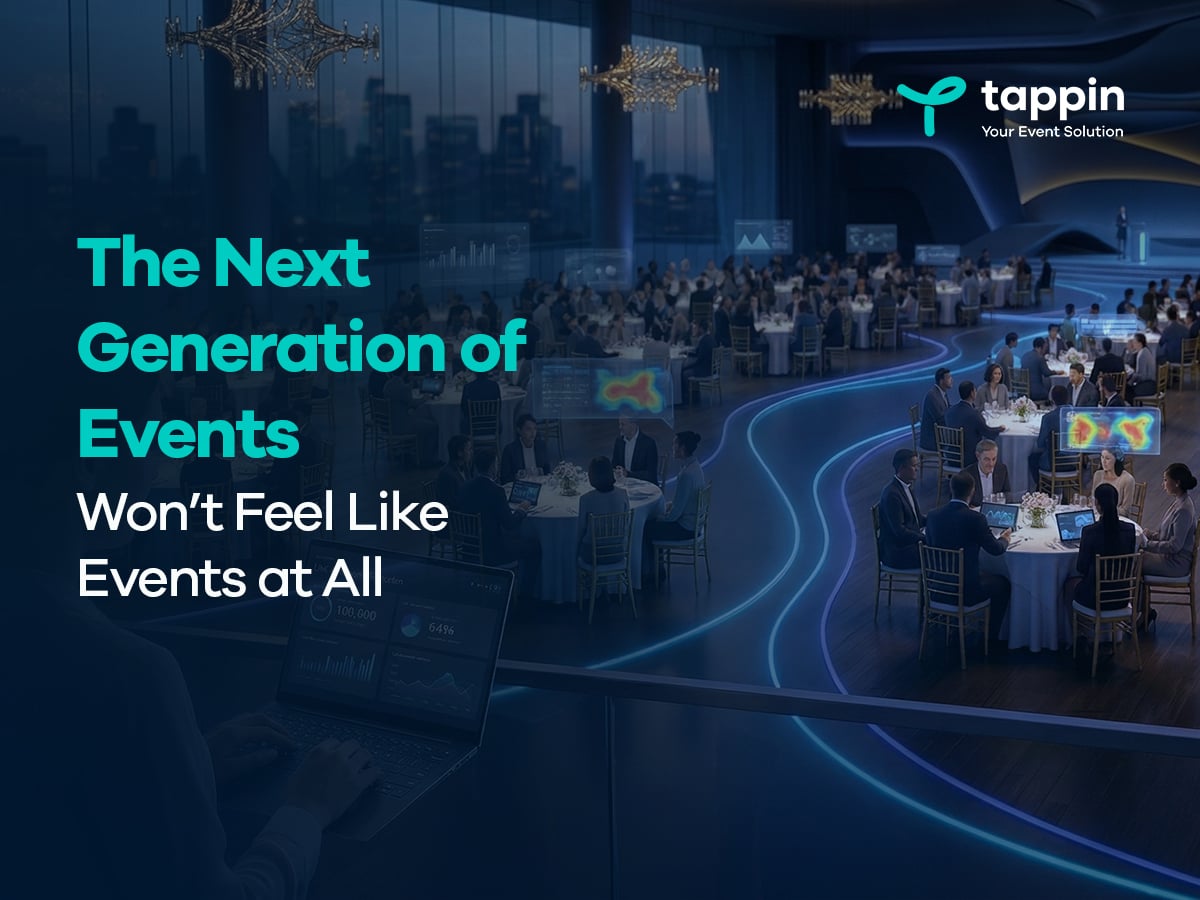
The statement that the next generation of events won’t feel like events at all sounds bold. But it is really just a description of what happens when everything works the way it should when the experience is so well considered that it stops being visible.
For event organizers in Norway, the practical question is simple: are your current tools capable of delivering that? If the honest answer is no, the problem is probably not the team running the events. It is the platform holding them back. Tappin was built for exactly this a unified event platform norway designed to make every stage of the event journey feel natural, connected, and worth coming back for.
Switch to an event platform built for what comes next See the full Tappin platform in a tailored 20-min demo. Book a Demo →