For a long time, content was the whole point. An event engagement platform was not something organisers thought about the agenda did the work. Keynote speakers, expert panels, and curated sessions were enough to fill a room. People travelled, cleared their calendars, and paid for tickets because access to knowledge was genuinely scarce. Events were one of the few places where concentrated, high-quality insight could be gathered in a single day.
That is simply not the world we live in anymore.
Today, content is available everywhere on demand, often free, and accessible from any device. Webinars, podcasts, newsletters, online communities: the ways professionals consume knowledge have multiplied faster than any event programme could match. In Norway, where digital adoption ranks among the highest in Europe and professionals are deeply selective with their time, this shift has been particularly sharp. People are not showing up for the slides. They are showing up for something content alone cannot provide.
The Real Reason People Still Attend Events And What It Means for Your Event Engagement Platform
People attend events to connect. It is that straightforward. They want to meet others working in the same industry, exchange ideas in real time, and be part of conversations that cannot happen in isolation no matter how sharp the speaker lineup is. The value is no longer on stage. It is in the room, between the people in it.
This shift has enormous implications for how events need to be designed and delivered. If connection is now the primary draw, then the structure of the event itself has to serve that goal not just leave it to chance. A coffee break is not a networking strategy. A badge and a room is not a community. And a passive audience listening to a talk is not an engaged one.
This is exactly why the role of an event engagement platform has become so central to how professional events in Norway are now planned and executed. It is no longer a nice-to-have. It is the infrastructure that makes meaningful participation possible.
From Broadcasting to Participating: How Events in Norway Are Changing
The traditional event model was built on broadcasting. One speaker, many listeners. One agenda, one experience for everyone. That format worked when the goal was to deliver information. But when the goal shifts to facilitating connection, the whole structure has to change. As we explored in our piece on how events in Norway need to be rethought, the problem is rarely the event itself it is the format it is still being squeezed into.
Sessions need to invite participation rather than demand passive attention. Networking cannot be left to corridor conversations and lucky timing. Attendees need to know who else is in the room before they arrive, understand who they should meet, and have low-friction ways to start conversations with purpose. Every touchpoint from registration through to post-event follow-up needs to support a sense of active involvement rather than passive attendance.
In the Nordic context, this matters even more. Norwegian professionals tend to be direct, well-prepared, and not inclined to waste time. They will not travel to Oslo for a day of presentations they could watch at home. But they will travel for genuine access access to the right people, the right conversations, and the kind of professional trust that only builds face to face. This aligns with what global event industry research consistently shows: changing customer expectations are now the single biggest factor reshaping how professional events are planned and delivered worldwide. An event engagement platform makes all of that possible at scale.
What a Strong Event Engagement Platform Actually Enables
Good intentions are not enough. Telling attendees to network and then leaving them to figure it out is not a strategy it is hope dressed up as a programme item. Enabling real engagement requires the right infrastructure, and that is precisely what a purpose-built event engagement platform is designed to deliver.
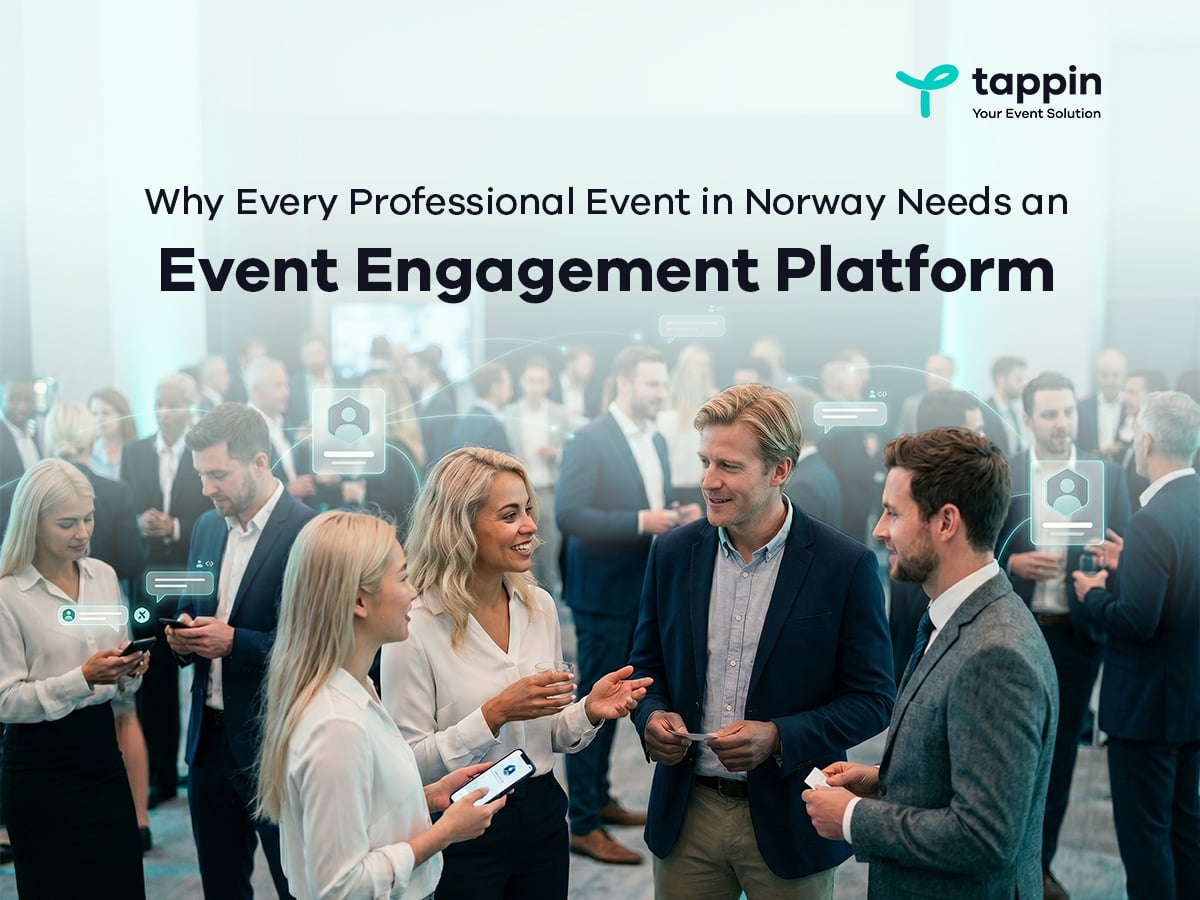
When done well, an event engagement platform allows attendees to discover relevant connections before the event even begins. It gives them structured, intuitive ways to reach out, book conversations, and join discussions without the awkwardness of cold introductions. During the event, it keeps communication flowing through live Q&A, polls, session chat, and real-time updates so the energy stays high and no one feels left on the outside. After the event, it extends the experience, giving people a way to follow up, stay in touch, and carry the value of the day forward. This is why organisers across Norway are increasingly rethinking how much agenda is actually needed and recognising that attendee engagement at events in Norway often improves when you give people more space, not more sessions.
Platforms like Tappin are doing exactly this across the Norwegian event ecosystem. By bringing communication, networking, and real-time interaction into a single, integrated solution, Tappin gives organisers the tools to design participation into the event not hope it happens on its own. The result is an experience that feels fluid, intentional, and genuinely valuable to everyone in the room.
Content Has Not Disappeared It Has Found a New Role
None of this means content no longer matters. It means the job of content has changed. Rather than being the destination, it has become the starting point a spark for the conversations that follow, not the conclusion of them.
A well-designed talk does not aim to leave the room informed. It aims to leave the room with something worth discussing a provocation, a challenge, a question that people want to take into the next coffee break. The real value is not what happens on stage. It is what gets built between people afterwards: the ideas sparked, the relationships formed, the problems solved collectively that no one could have cracked alone.
When content works as a catalyst rather than a conclusion, and when a solid event engagement platform is in place to capture and sustain the energy it creates, an event becomes something far more valuable than a knowledge-transfer exercise. It becomes a space where something new gets built.
The Future of Professional Events in Norway Starts With the Right Event Engagement Platform
As this shift continues to play out across Norway and the wider Nordic market, the gap will widen between events that understand it and those that do not. The ones that succeed will be the ones that treat engagement not as an amenity bolted on at the end, but as the product itself investing in the tools, structure, and design needed to make it work every time.
Information can be found anywhere. That has been true for years, and it will only become more true as technology advances. But meaningful professional connection still requires a space to happen a context where trust can form, where ideas can be tested in real conversation, and where the right people can find each other in a way that would not have happened otherwise. Designing that space well making it feel natural, seamless, and genuinely worth someone’s time is the real challenge facing event organisers in Norway today. And increasingly, the answer starts with choosing the right event engagement platform to make it all possible.
See Tappin’s engagement tools running on a real event 20-minute demo, your questions, your event type. No sales script. Book a Demo →