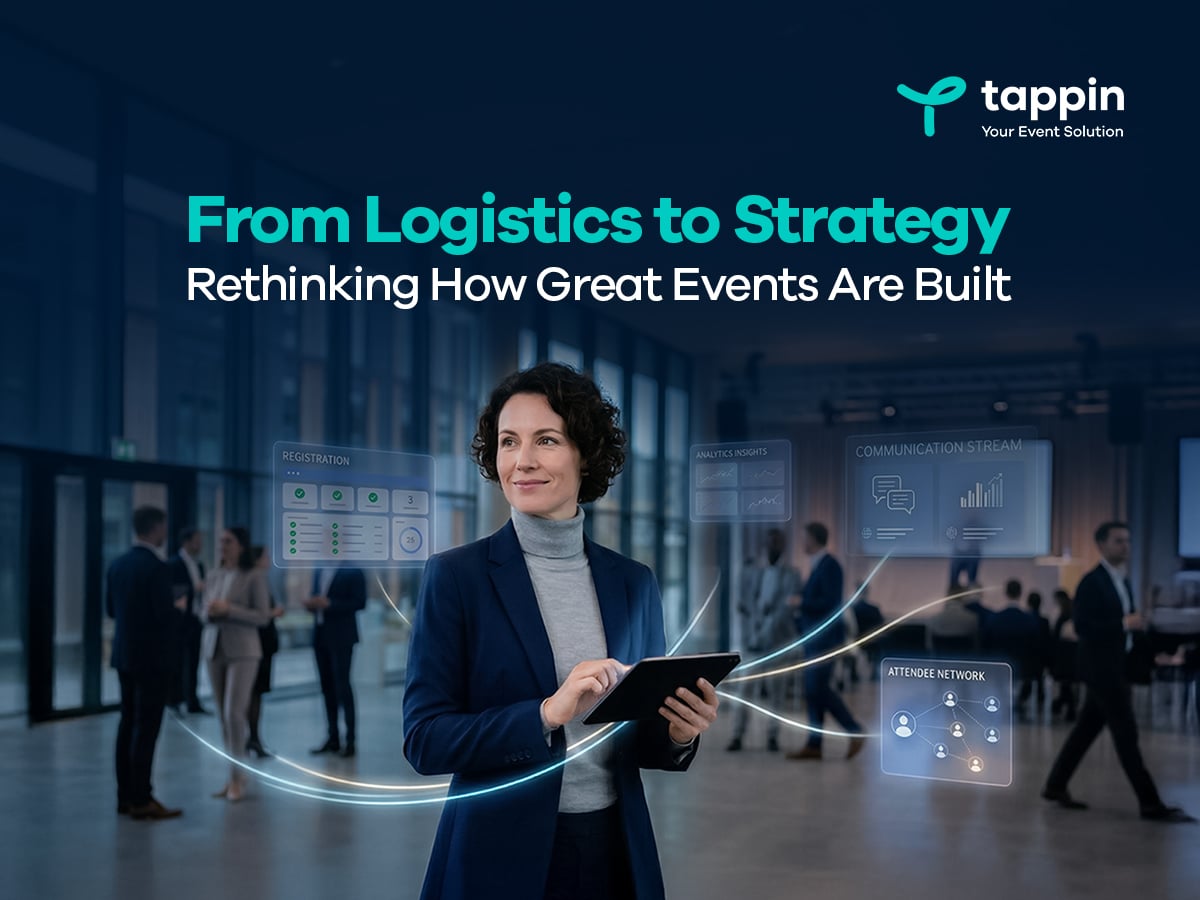
Ask most event organizers what defines success, and the answers tend to be fairly consistent. But event planning Norway has evolved beyond smooth execution alone. Registrations that didn’t break, speakers who showed up on time, and agendas that stayed on track are no longer enough on their own.
For a long time, it was. But event planning in Norway has moved on, and the bar has shifted in ways that a smooth run no longer clears on its own. Attendees today are not just looking for something well-organized. They are looking for something worth attending. That distinction sounds small, but it changes almost everything about how an event should be built.
This shift is becoming central to event planning Norway, as expectations continue to evolve. where logistics ends and strategy begins, and why the organizers who make that transition tend to build events that people remember and return to.
Event Planning Norway: Logistics Is the Floor, Not the Ceiling
There is nothing wrong with logistics. A poorly run event one where check-in queues never move, the livestream cuts out mid-session, or the agenda is impossible to navigate will undermine even the strongest content. Getting the basics right still matters enormously.
But logistics is now the minimum. It is what attendees expect without thinking about it, the same way they expect a venue to have working lights. When it fails, they notice immediately. When it works, they do not notice at all and that is exactly as it should be. That baseline is now expected in event planning Norway, not rewarded.
The problem comes when logistics becomes the ambition. When the definition of a successful event stops at ‘nothing went wrong,’ the event has done the least it could. It ran. It didn’t necessarily mean anything.
The shift toward strategy means asking different questions at the start before a venue is booked or a schedule is built. Not ‘how do we make sure registration works?’ but ‘what should attendees walk away thinking, feeling, or having decided?’ Not ‘how do we fill the programme?’ but ‘what conversations do we actually want to start?’
What modern event strategy looks like in practice
What Strategic Event Planning Norway Looks Like in Norway
Strategic event planning starts with intent a clear, honest answer to what the event is actually trying to achieve. In event planning Norway, that clarity is what separates average events from impactful ones. That sounds simple, but in practice it is often the step that gets skipped. Teams jump to venue, agenda, and catering because those feel concrete. Purpose feels abstract. But everything downstream format, content, networking structure, communication becomes more coherent when it flows from a clear starting point.
Once purpose is established, strategy works differently across each phase of the event:
Before the event
The pre-event phase is where most of the experience is quietly shaped. Personalized communication builds relevance before anyone has set foot in the room. A curated agenda that reflects an attendee’s actual interests signals that the organizer has thought about them specifically not just about filling slots. Early networking opportunities let connections begin forming before the day itself, so attendees arrive already engaged rather than starting cold.
During the event
During the event, strategy shows up as coherence. Sessions connect to each other. Networking is facilitated rather than left to chance. The flow from one part of the programme to the next feels considered rather than arbitrary. Attendees can participate, ask questions, and navigate without friction not because the technology is impressive, but because it has been put together with care. When this works, the event stops feeling like a series of tasks to get through and starts feeling like a single, continuous experience.
After the event
The post-event phase is where most events quietly abandon their attendees. Follow-up that actually extends the conversations started on the day. Data insights that help organizers understand what landed and what didn’t. Community structures that keep relationships alive beyond the final session. The events people remember and return to are almost always the ones that kept giving after the room cleared.
Why Event Planning Norway Is Changing in the Nordics
Nordic audiences are not easily impressed by spectacle but they are highly attuned to thoughtfulness. An event that has clearly been designed around them, their time, and their professional needs will consistently outperform one built around a generic programme, regardless of how large or well-produced the latter might be.
That means the standard for event planning Norway is set by quality of intent, not by scale. A 150-person conference designed precisely for that specific audience will often leave a stronger impression than a 1,500-person event where the content could apply to anyone. Norwegian attendees notice the difference, and they tend to remember it the next time a registration link lands in their inbox.
There is also a practical dimension to this. Norwegian professionals increasingly attend events as part of their actual working lives not as a break from them. They expect the content to connect to real decisions they are making, to give them something genuinely useful, and to respect the fact that their time is limited. Events that don’t clear that bar tend to shrink, quietly, over successive years.
Technology as a Strategic Layer, Not a Toolbox
One reason the gap between logistics and strategy has become so visible is technology. Most event teams in Norway now have access to tools for registration, communication, analytics, and networking. The question is whether those tools are being used tactically to handle separate tasks or as an integrated layer that supports the full event journey.
A seamless event platform approach
The difference matters more than it might seem. A registration tool handles sign-ups. A strategic event platform connects registration to communication, to the live experience, to post-event follow-up and makes data available across all of it. Organizers stop reacting to problems and start making informed decisions. How Circle K reduced event administration time by 50%. Attendees stop navigating between disconnected systems and move through a coherent experience instead.
According to Statistics Norway (SSB), digital adoption across Norwegian organisations is among the highest in Europe. That means attendees arrive with high expectations for how well digital tools should work together and fragmented technology stacks no longer feel like a minor inconvenience. They feel like a lack of care.
Tappin was built to operate as exactly this kind of integrated layer. Registration, communication, networking, and analytics sit inside the same platform which means the event experience stays coherent from the first touchpoint to the last follow-up. For organizers, that removes the overhead of managing multiple systems. For attendees, it removes the friction of moving between them.
The Events That Get Remembered
There is a particular quality to events that have been designed with genuine strategic intent. It is hard to describe precisely, but easy to recognize when you are in one. The content connects to something real. The networking feels relevant rather than obligatory. The follow-up arrives at exactly the right moment. And somewhere during the day, you stop thinking about the structure and start focusing on what is actually happening in front of you.
That quality is not accidental, and it is not especially expensive. It comes from decisions made early about purpose, about audience, about what the event is trying to create that then flow consistently through every subsequent choice. The venue, the format, the communication, the technology. Each either reinforces the intent or quietly dilutes it.
| What separates good events from genuinely great ones Good events: Run smoothly, deliver content, finish on time. Great events: Create value that outlasts the schedule connections that develop, ideas that get actioned, communities that persist. The difference is almost always strategic intent, applied consistently from the first invitation to the final follow-up. |
For event organizers in Norway, this is increasingly the more useful question to be asking not ‘did everything run on time?’ but ‘did it actually work?’ Not ‘how many people attended?’ but ‘did the people who came leave with something they couldn’t have found anywhere else?’
Strategy Is What Makes Events Worth Coming Back To
The move from logistics to strategy is not about abandoning operational discipline. It is about what that discipline is in service of. The most memorable events are not the ones that ran without incident they are the ones that were clearly built around a purpose, designed to create something specific, and followed through on that intent at every stage.
Event planning Norway is heading in this direction, and the organizers who are ahead of it are already building differently. They start with intent. They design the full journey. They use technology to hold it all together rather than to patch something functional together at the last minute. Tappin was built for that kind of event planning a single platform that supports every stage of the journey, so that the strategy put in at the start actually shows up in the experience attendees have at the end.